Bear The Lion

Ministry | Formation | Stewardship

  • HOME
  • ABOUT
  • PODCAST
  • THE STUDY
  • ARTICLES
  • RESOURCES
    • Teaching Audio
    • The Reforming Lounge
    • Storehouse McAllen Sermon Audio

Every Book I Read | A Very Late 2023 Edition

July 25, 2024 by Marco De Leon

You know, that’s not actually my book shelf in the picture.

I wanted to be clear about that.

I’m also not that great of a photographer.

Also, I said that I would start writing again and I didn’t.

This is turning out to be a confession more than an entry on the books I read this year.

But at least it’s an honest entry.

Do you know what else is honest about this entry? It’s that it was meant to be published seven months ago.

Basically, I’m simply trying to catch you up as we “hopefully” gear up for consistent content on spiritual formation and what it looks like to be faithfully present and productive.

But, I digress. Let me invite you to dive into what last year’s reading list entailed and hopefully you pick up something good to read!

2023 was a time where I read less as compared to other years. As a pastor, I’m always in a book — whether I’m reading through my Bible or studying the Scriptures accompanied by a theological book such as a commentary or other resource, but in that arena my reading is never actually finished, especially during sermon preparation. The goal is almost purely for research. The books on this entry are separate from the sermon preparation kind of reading.

A few month ago, I read an article (or watched a video) where author Ryan Holiday said that if you only walk away with one or two things after reading a book, it was worth reading it because those are one or two things that you didn’t know and could make a difference in your life.

That was liberating. That’s what I want to share with you.

1. Atomic Habits by James Clear —
Biggest Takeaway: Your environment shapes your habits. I wrote, underlined, and highlighted so many important bits of information and shareable quotes from James Clear, but his chapter on how environment shapes our habits was the most memorable; etched into my brain. Clear writes, “Environment is the invisible hand that shapes human behavior…a small change in what you see can lead to a big shift in what you do. As a result, you can image how important it is to live and work in environments that are filled with productive cues and devoid of unproductive ones…a stable environment where everything has a place and a purpose is an environment where habits can easily form.” This was such a game changer for me when it came to writing and studying that my wife and I restructured the entire layout of my home office making my productivity not only more effective, but intentional.

2. Preaching & Preachers by Martyn Lloyd Jones —
Books two and three are what I used in our Preaching Lab last year and they served our young preachers well because they’re being challenged in their gifting as they grow as preachers.
Biggest take-away: In the opening chapter, Dr. Martyn Lloyd Jones writes, “…the most urgent need in the Christian Church today is true preaching; and as it is the greatest and most urgent need in the Church, it is obviously the greatest need of the world also.” This quote set the tone for the entire book because it displayed not only the urgency of preaching and the preacher, but his own passion and conviction in the necessity and developing of gospel-centered preachers. This book made the pulpit intimidating, but gave a reverence that was, perhaps, absent.

3. Preaching that Moves People by Yancey Arrington —
This was incredibly helpful from a practical perspective on preaching. Arrington writes, “The task of the preacher is to guide people ‘down the mountain’ of his sermon: brining them through your introduction, body, and conclusion so that hearers are not only with you at the bottom of the hill but have maximized their journey getting there. In preaching terms, the bottom of the mountain is the response you want hearers to have at the message’s conclusion. This includes their actions, thoughts, and emotions.” Our preachers can preach, but often they, as young men, tend to be very information driven. Arrington’s book helped them learn how to shape their sermons in a way that served our congregation by guiding them rather than dumping information on them.

4. Pastor, Jesus Is Enough by Jeremy Writebol —
On the seven letters to the churches in Revelation, Writebol summaries, “Underpinning every letter is the fact that the pastors are held in the dominant hand of authority and care of Jesus Christ himself. He begins each address confronting the pastors with a specific facet of his identity, directly pointed to the need and lack of ‘enoughness’ that each pastor has. These letters are about how Jesus is enough for each of them, in their particular needs.” There are many take-aways in this book, but every letter is shaped a little different with meaningful and memorable things to consider. Therefore, if you find yourself thinking that you are not enough, this book is a helpful reminder in having and knowing that Jesus is enough.

5. The Gospel Shaped Leaders by Scott Thomas —
Scott is a great pastoral coach and a friend, seasoned in ministry, and one of the most humble people that I know. I love to learn from him. The two most memorable things I walked away with were a great introduction into the need to be watchful of our souls and something, I found, comical but true. Thomas writes, “If we merely pay careful attention to the flock, we’re only doing half our job. What is missing, however, is life threatening. Church leaders that make a wreck of their lives will inevitably make a wreck of the flock. Church leaders must pay careful attention to themselves while paying careful attention to those in their care.” And what I will never forget: “…passion without a plan is just cow manure. No person goes into battle without first devising a plan (Luke 14:31).”

6. Strange New World by Carl Truman —
“…ethics of life and death in a world of expressive individualism tend to default to a form of utilitarianism. Utilitarianism is the philosophy of life where the morally defensible position is that which gives most happiness to most of the persons involved.” And “If human happiness is constitutes by an inner sense of well being, then anything that disrupts that is problematic. The implications of this are dramatic and set to be comprehensive, or at least to involve all areas of the public square.” “Expressive individualism in the form in which we find it in contemporary society is problematic for the ways in which it places individuals and their own desires — we might even say their own egos — at the center of the moral universe.”

7. The Common Rule by Justin Earley —
“Habits form much more than our schedules: they form our hearts.” On writing on the difference between habits and liturgy, Earley writes “they’re both something repeated over and over, which forms you; the only difference is that a liturgy admits that it’s an act of worship. Calling habits may seem odd, but we need language to emphasize the non-neutrality of our day-to-day routines. Habits often obscure what we’re really worshipping, but that doesn’t mean we’re not worshipping something. The question is, what are we worshipping?” This was SO good. Our lives are literally a daily liturgy.

8. Mere Christianity by C.S. Lewis —
“If you mistake for your own merits what are really God’s gifts to you through nature, and if you are contented with simply being nice, you are still a rebel; and all those gifts will only make your fall more terrible, your corruption more complicated, your bad example more disastrous. The Devil was an archangel once; his natural gifts were as far above yours as yours are above those of a chimpanzee.” “A world of nice people, content in their own niceness, looking no further, turned away from God, would be just as desperately in need of salvation as a miserable world — and might even be more difficult to save.” “God became man to turn creatures into sons: not simply to produce better men of the old kind but to produce a new kind of man”

9. A Hunger for God by John Piper —
CLASSIC Piper. “The true mortification of our carnal nature is not a simple matter of denial and discipline. It is an internal, spiritual matter of finding more contentment in Christ than in food.” And “fasting that is not aimed at starving sin while feasting on God is self-deluded. It is not really God that we hunger for in such fasting. The hunger of fasting is a hunger for God, and the test of that hunger is whether it includes a hunger for holiness.”

10. On Getting Out of Bed by Alan Noble —
“For the stoic, though they can choose to face death bravely, death is the final word. For the Christian, death has been conquered, so we can face it bravely regardless of our fears. We can take a step to the block, confident in our hope.” And “God is feeding our souls by giving us tastes of hope that defy the oppression of our spirits. Do not mock God’s grace by rejecting it for your own suffering.”

11. Managing Leadership Anxiety by Steve Cuss —
“…your. ability to grow as a leader is connected to your capacity to examine your mistakes without condemnation and defensiveness.” This book was helpful in some ways, but often I found myself arguing and disagreeing with Cuss on several leadership principles — not because they were bad, but because they were incomplete in my opinion.

12. Zeal Without Burnout by Christopher Ash —
“If we do not give space for renewal, there will soon be nothing left for us to give.”

13. Groups: The Art of Leading Community by Jared Musgrove and Justin Elaeros —
“The less relational your church is, the less transformational your church will be.” And quoting Bonhoeffer from Life Together, “Sin demands to have a man by himself. It withdraws him from the community. The more isolated a person is, the more extractive will be the power of sin over him, and the more deeply he becomes involved in it, the more disastrous is his isolation.”

14. Praying Like Monks, Living Like Fools by Tyler Staton —
“Intimacy leads to fruitfulness, not the other way around.” And quoting Dom John Chapman: “Pray as you can, and don’t try to pray as you can’t.” This was a great resource for counseling and discipleship last year where I saw several finding themselves “stuck” in their prayer lives or disconnected entirely because prayer and devotion didn’t look as ideal as they wanted to.

15. The Men We Need by Brad Hansen —
“If the keeper’s heart is lost, the garden is lost too.” “My sin isn’t sin because it’s on a random list of activities that God just doesn’t happen to like. My sin is sin because it stops me from being who I’m supposed to be and what I could have been. It’s a shortcut that leads away from the kingdom of God, where I can flourish, to a different kingdom — the kingdom of me.” Men — our job is to be the keeper of our gardens.

Reading is good for your soul.

Reading is a gift because words (especially yours) matter.

I’d love to hear about what you’re reading or what you’ve read, recently or even from last year’s list!

Featured
Lots of books.jpeg
July 8, 2019
Books, Theology
Resources on The Apostles' Creed
July 8, 2019
Books, Theology
Read more →
July 8, 2019
Books, Theology
More books.jpeg
May 31, 2019
Books, Life
Summer 2019 Reading List
May 31, 2019
Books, Life
Read more →
May 31, 2019
Books, Life
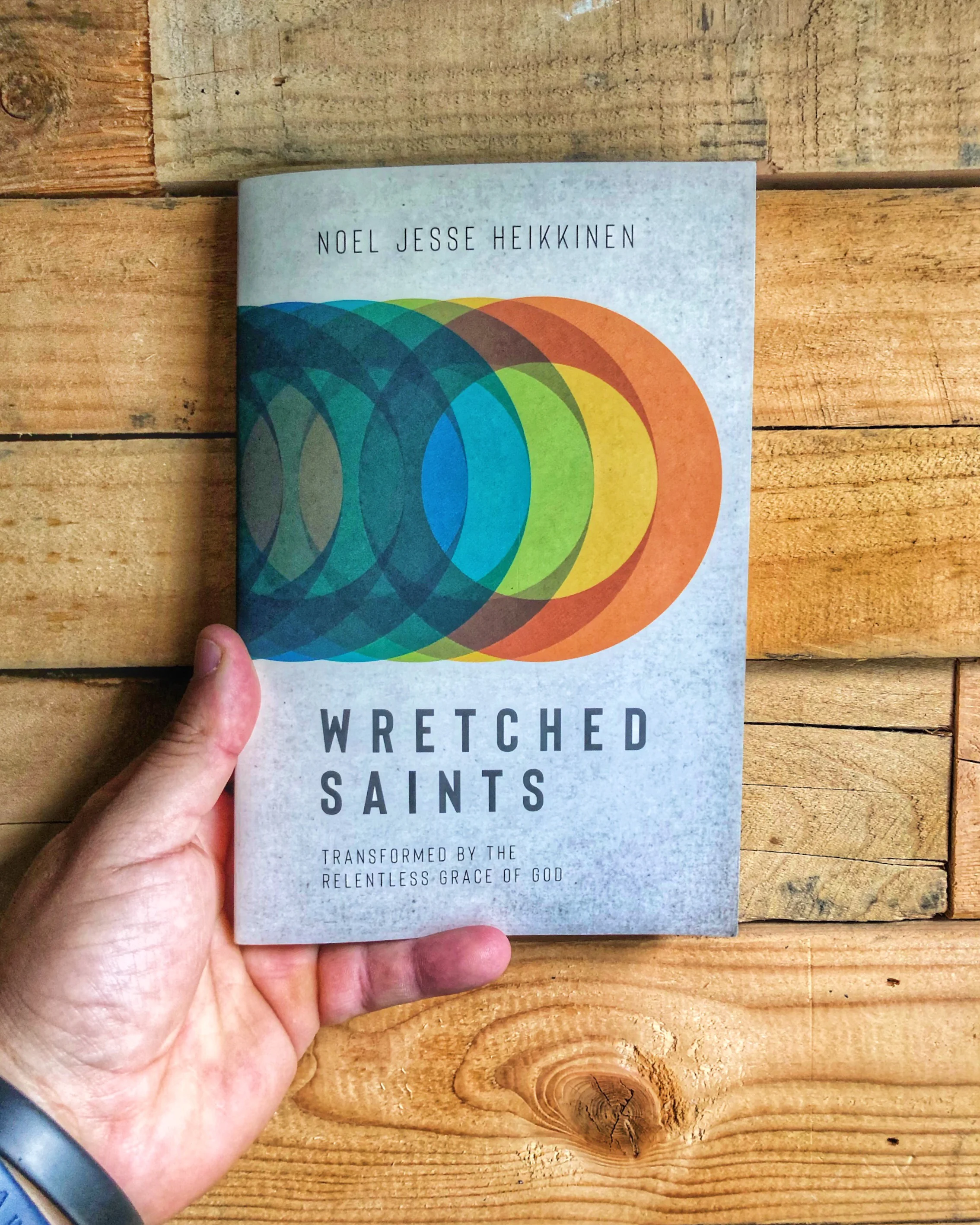
Wretched Saints.jpg
March 25, 2019
Book Review, Books
Books: Wretched Saints (Review)
March 25, 2019
Book Review, Books
Read more →
March 25, 2019
Book Review, Books


July 25, 2024 /Marco De Leon
books, Preaching, Leadership Development
Comment

Writing...Again.

October 19, 2023 by Marco De Leon

Among her top fifteen reasons for why most writers don’t make it out there in the world (or in general), number two reads, “They [writers] will ‘invest’ eons of time deciding their niche. Rather than writing their way to the niche.”

Lipika Sahu, ma’am, that stung.

Yet, she’s absolutely right in her fifteen point assessment. I have been wanting to return to the blinking cursor for several months now. There have been countless times when I’m with my wife at some cool, hip distillery in central Texas and I look over at her to ask (for the 1000th time), “Do you think I should start writing again.” Personally, I think she orders another round not because the bourbon is so good (although it is), but because she’s tired of hearing me wonder about the possibilities as opposed to seeing me to work out the cobwebs.

Therefore, here I am. I have been sent, on my own accord, however. Or was I?

I haven’t posted anything on this website in a little over two years, but I’ve thought about posting regularly. And it’s not procrastination that I’m hung up on, but pondering. Only, I think it’s enough.

I want to say that I’ll be creative and cunning, but I haven’t even been consistent and consistent. To be honest, I feel like I have so much to write about without having the words to say it. And yet just when I think that I’ve laid my heart on the table with you, Sahu strikes again with point number nine, “they will hide behind the cloak of ‘learning.’ Acing the theories but flunking the practicals.”

Madam, please, stop.

She’s right…again.

Fine.

From here on forward, I will not provide you with a sense of clear, creative, content that is consistent, but rather I will say that I hope to invite you into the mundane mess of the miraculous which is a stunning way of saying that I’ll write something at some point.

Could I give you hint?

I haven’t stopped reading. Nay, it was the great Harry Truman who said, “Not all readers become leaders, but all leaders must be readers.” I say this because I think a good introductory post (apart from this attempt) will be in the form of what I’ve been reading and I hope that it brings encouragement and entertainment.

In the end, Sahu is right, and I’m thankful for her article. So, with conviction settled on my wings and the uncertainty of tomorrow, I look forward to seeing you here again.

Recommended Reading
1. 15 Reasons Why 99% of New Writers Will Never Make It (Ouch!) by Lipika Sahu

October 19, 2023 /Marco De Leon
writing
Comment
Image from iOS.jpg

The Antioch Institute

April 13, 2021 by Marco De Leon

I feel as though all I’m doing is letting my readers know about all of the things happening at Storehouse McAllen as opposed to me actually writing about confessional theology and mestizo culture. But in reality, that is actually all that I’m doing and part of the reason is that we have crazy busy working on and releasing so many new things. It’s definitely been an exciting time, but I’m ready to write about confessional jazz.

Nevertheless, by letting you know of all that’s going on, I’m able to stay fairly consistent in my blog posts. Well, this month we launched the start of The Antioch Institute which will serve as the equipping arm of our church and the aim of The Antioch Institute is to mature and multiply disciples of Christ in the context of everyday ministry. When the Apostle Paul writes to the Ephesian church, he tells them that the role of the leadership is to equip the saints for the work of ministry (Ephesians 4:11-13). Personally, I believe that the church serves as the primary hub for discipleship, theological development, and spiritual formation.

Over the last several months, we have seen a growing need to provide a variety of classes, programs, and workshops geared toward educating and challenging the members of our congregation in their theology. The purpose of this is so that they would be equipped for the work of ministry in the context of their everyday life whether that’s at home, the workplace, in the community, or as they are discerning a call toward ministry.

For the Spring semester, we will have started at least four avenues of development and formation. But first, I think it’s important to note how we have broken down The Antioch Institute.

AVENUES OF DISCIPLESHIP

Workshops
Workshops are short classes where we teach how to apply our theology. The Bible never separates theology from practice so neither should we, but often Christians need help in exercising what they believe in the context of parenting, marriage, finances, and many other areas. These workshops or classes serve as practical teaching opportunities to come alongside Christians as they are working through the regular rhythms of life.

Bible Studies
Bible Studies are smaller gatherings of men and women centered around Scripture. It sounds pretty basic, but these smaller gatherings are almost like intensives with teaching and discussion around God’s Word. They’re not too topical and the aim here is to teach Christians how to read their Bibles, study their Bibles, and grow in their walk with the Lord together.

Theological Development
While one could argue that all of these sections are focused on some sort of theological development, in this section we are diving deep into things such as covenant or systematic theology and the courses can be as short as a few weeks or as long as a year. Participants will sometimes have to apply for the classes or programs because some of these courses will consume a great deal of their time and maturity is critical here.

Residencies and Internships
There have been and are individuals who are discerning a call from the Lord into formal vocational ministry. For some, it may be pastoral ministry, church planting, or serving on a staff team at Storehouse McAllen or elsewhere. Our residencies and internships are about 12-24 months long and our goal is to come alongside men and women and equip them in the varying areas of ministry as they discern their call to ministry.

I’m really excited about The Antioch Institute. It’s been something that we have been working on for several months now and interestingly enough, it was birthed after reading the pulse of our church and surrounding culture in the midst of the pandemic so I’m thankful to God for that time. By His grace, it has been off to a fruitful start!

Here’s a video that we put together where I unpack The Antioch Institute a little more. Feel free to share it and as usual, I’d love to hear what you have going on at your church and in your context!

Featured
Lots of books.jpeg
July 8, 2019
Resources on The Apostles' Creed
July 8, 2019
Read more →
July 8, 2019
Bible (Confession).jpeg
July 6, 2019
Confessions and Creeds
July 6, 2019
Read more →
July 6, 2019
New 1.JPG
July 6, 2019
The Confessional Taco Podcast
July 6, 2019
Read more →
July 6, 2019
April 13, 2021 /Marco De Leon
Comment
image_6483441.JPG

Weekly Staff Meeting

March 30, 2021 by Marco De Leon

Over the years, I have been asked, “so what do y’all do during the week?” and in part, I think that comes from this misconception that my staff and I only work on Sunday or one other day of the week. So, I figured I would provide you with a little insight at what happens during the week when we gather as a staff. For us, the best day to meet and work through an overview of Sunday and weekly responsibilities is Tuesday morning.

Personally, this works best for me not because I take Monday’s off, but simply because I’m not at my best on Monday. I still work by addressing administrative responsibilities and getting started on the next sermon, but I’m not in the best condition to have meetings on Mondays. Additionally, my staff is either part-time or a volunteer so they have other work responsibilities that call their attention on Monday.

Once we get together on Tuesday and brew all of the coffee, we have a “launching pad” system that we work through. I say “launching pad” because we don’t always stick to it. On occasion, other things come up or our meetings may be much more brief depending on what our week looks like.

DEVOTION

The first thing we do is have a staff devotion and this is led by someone on the team. It’s usually based on whatever it is they’re reading in Scripture and if it’s their turn to lead our devotion, they come prepared with a few short questions and we engage the Word through discussion, encouragement, and prayer for one another. This is always a beneficial and fruitful time because it helps us draw closer to one another as we draw closer to Christ through His word.

SUNDAY OVERVIEW

The next part of our time together is walking and working through everything that went well and not so well on Sunday mornings. We will work through logistics within our team communication and liturgy. For instance, the last several months has consisted of a discussion centered around our Sunday morning liturgy, led by Eric, and we worked through purpose, planning, and execution for the Sunday gathering. And, in other areas, logistics regarding our communication with volunteer teams is always something we’re trying to improve or the experience parents receive upon checking their kids in for Storehouse Kids. All of these elements to the Sunday gathering are discussed, torn apart, and worked through each week.

MAKING IT HAPPEN

This portion of our time has everything to do with follow up or follow through. In other words, if there are work responsibilities that involve everyone and we need to put our heads together or simply and collectively work through classes, communication, or other areas of ministry that need attention, we hammer it out in this section. It’s all about taking ownership of your area of ministry and creating follow up with teams and volunteers or following through with whatever you need to get done.

CELEBRATION AND CALENDAR REVIEW

I must admit, we do a terrible job of celebrating and demonstrating thanksgiving when it comes to slowing down and praising God for His work and faithfulness in and through the life of our church. So, we take time to work through and praise God for all that He is doing or has done in specific areas of our church. Shortly after this time of praise, we look at our calendar and remind everyone of what we have coming up over the next 4-6 weeks. This keeps us all on the same page.

CLOSING PRAYER

Once we’re done working through everything, have our responsibilities for the week, and jump on the same page we break up into different areas of the office and get to work in our individual ministries, working together regularly while at the same time maximizing the time together. Our staff meeting lasts about an hour and a half, but we’re at the office all day for the most part.

As I mentioned, since the majority of the staff team is either part-time or a volunteer, we have all dedicated ourselves to Tuesday to be together, have a bunch of laughs, and also work in our areas of ministry. For some, Tuesday may be the only day (apart from Sunday) that they can put forth this kind of time due to their other job responsibilities.

We have worked through so many different forms of staff meetings in the last four years and it takes time to find a schedule that works for everyone along with a team rhythm and dynamic. When we first replanted the church, our staff team met on Saturday mornings, then we moved to Tuesday evenings, and then we tried Sunday afternoons, and finally after all of the changes we were able to land and commit to Tuesday mornings and that’s where we’ve been for the last year and a half.

I’d love to hear what you and your team do. And if there are any follow up questions or comments, I’d love to hear them. I’m always interested in what other churches are working through with their teams.

Featured
Camera Focus.jpeg
May 13, 2020
Leadership Development and Clarity
May 13, 2020
Read more →
May 13, 2020
Whiteboard.jpeg
April 26, 2019
Staff Culture and Values
April 26, 2019
Read more →
April 26, 2019
Counseling .jpeg
January 19, 2019
3 Reminders About Counseling
January 19, 2019
Read more →
January 19, 2019
March 30, 2021 /Marco De Leon
Comment
Native Citizens L2.png

The Native Citizens Podcast

March 29, 2021 by Marco De Leon

Last year, a few of us got together and started the Native Citizens podcast at Storehouse McAllen and this morning, we officially launched season two of our podcast. It’s been a really fun and fruitful time of discussion, especially with the number of topics we have covered over the last few months.

We began this podcast for our church for a few reasons. First, before COVID shut everything down, we were already beginning to consider how to release and make more free resources available for our church. We had been (and still do) writing content for our groups for a few years now and that has been going well, but we wanted to expand the content as well as the participation so we began doing daily devotionals which eventually became weekly devotional videos led by several members in our church during the 2020 season. All of this to say, we started having a discussion around starting a podcast in the fall based on feedback we were receiving from church members and we learned that we had all the equipment at our disposal to make it happen. All we needed to do was make time for the podcast recordings. So, in short, we had the resources available to get this going.

Secondly, we are not aware of any other podcast within the context of ministry in the RGV talking about theology and culture so we saw this as a great opportunity to equip our church for discipleship and mission in our city and community. When you listen to the podcast, we incorporate, certainly our personalities, but also a lot of Valley culture—good or bad—for the sake of working through it as we filter them through the lens of the gospel.

Finally, this podcast was an easy way for our church to hear from more than just me on a variety of topics. Every season, we rotate hosts so our church and listeners are able to hear from a variety of speakers. For instance, last year we began with LC, who, at the time, was our ministry intern; Eric who is our liturgy director; and myself. For season two, I return to the podcast with LC, who is now our Kids Director, and Jay who is a covenant member and leads a few of our teams on Sunday mornings. Then during the summer, there will be a completely new set of voices.

WHY NATIVE CITIZENS?

One of the questions, we received most as we started to prepare for this podcast was, “Why Native Citizens?” And I don’t actually think we ever addressed it apart from sporadic conversations. But I’ll answer it with clarity on here. We went with Native Citizens for two reasons. The first is because all of us are Natives of the Rio Grande Valley or what is considered South Texas so it is important to understand the nature and culture of the RGV as we dive into a variety of topics that are rooted in Mexican-American tradition, history, and overall Valley philosophy. However, you don’t have to be of Mexican-American heritage to understand the Valley. If you are from the Valley, but not a Hispanic, then we’d call you a “Valley Hispanic.” The culture and rhythms of the Rio Grande Valley are all ingrained in you, therefore, making you just as qualified to speak on RGV culture and tradition.

Second, the term citizens comes from our heavenly citizenship (Philippians 3:20). As much as we love our Rio Grande Valley, at the end of the day our primary identity is that we belong to Christ and our hope and home is not here, but in heaven. So, as we discuss the culture of our beloved RGV, we are doing so primarily through the lens of the gospel.

All of this to say, it’s been a wonderful time and I have loved the recording process. I have received a few questions from many on how to begin a podcast so I may write about that at a later day. If you or your church has started a podcast, I’d love to hear what you have going on. Until then, check out the Native Citizens (link below) and I hope you enjoy some laughs, Valley culture, and theological discussion.

RECOMMENDED LISTENING

1. Native Citizens Podcast

Featured
April 8, 2019
Not All Tacos Are Created Equally: A Brief Look at Hispanics and The Church
April 8, 2019
Read more →
April 8, 2019
July 1, 2016
The Cigar Shop
July 1, 2016
Read more →
July 1, 2016
February 29, 2016
February 29, 2016
Read more →
February 29, 2016


March 29, 2021 /Marco De Leon
Comment
  • Newer
  • Older

Powered by Cigars